 ClutterBuster
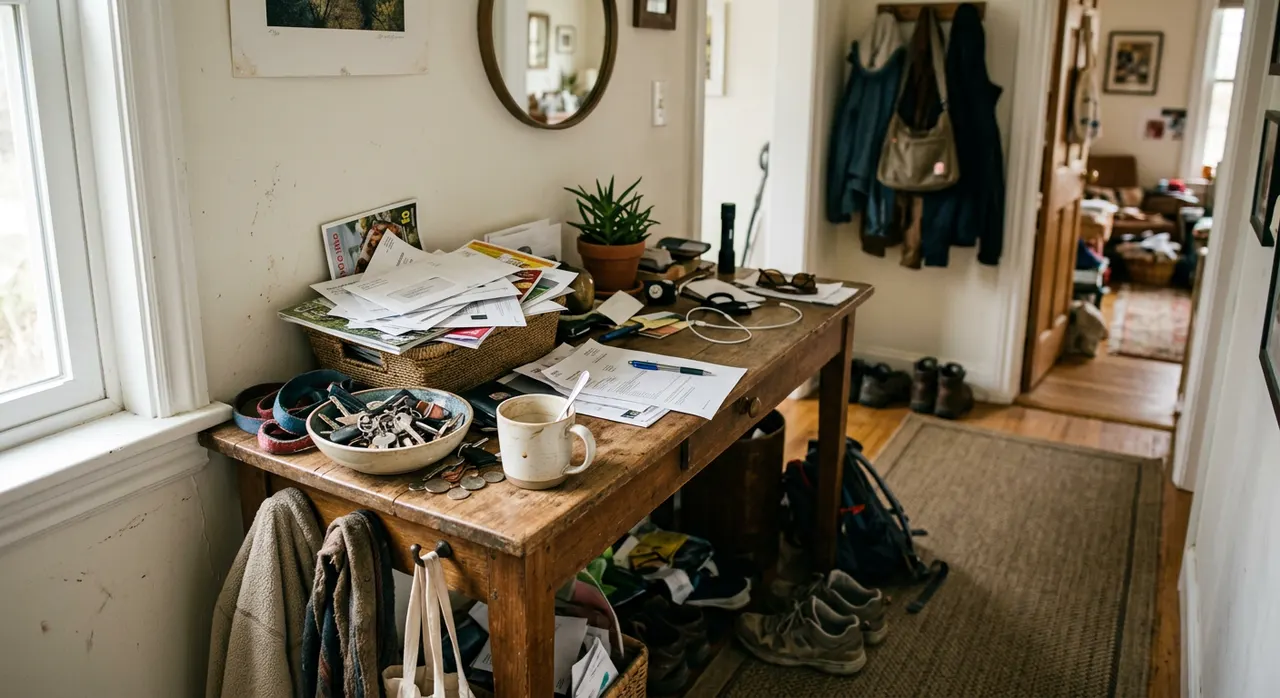
You know that feeling, right? You walk into a room, maybe the living room after a busy week, or a bedroom that’s accumulated a few too many ‘just put it here for now’ piles. And instead of feeling motivated, you just feel… a bit numb. Or maybe a lot numb. The sheer volume of stuff seems to mock you, and the idea of tackling it all just makes you want to lie down and pull a blanket over your head.
That’s what it feels like to declutter when you're overwhelmed. It's not about being lazy or not caring; it's about your brain's protective response to a task that feels too big, too complex, and too draining for your current energy levels.
But here’s the thing: even on those low-spoon days, even when the mental fog is thick, you can still make progress. Small, gentle, almost invisible progress. And those tiny steps? They're surprisingly powerful at shifting that feeling of overwhelm.
Why Does Clutter Make Us Feel Overwhelmed?
It's not just your imagination. Studies show that a cluttered environment can actually increase stress hormones, reduce focus, and make us feel more anxious. When there's too much visual information, our brains have to work harder to process it all, leading to mental fatigue.
And when you're already feeling overwhelmed by life – work, family, health, mental load – adding a physically overwhelming space to the mix can feel like the straw that breaks the camel's back. You might see a pile of laundry and think of the sorting, the washing, the drying, the folding, the putting away… and suddenly, it's not just a pile of clothes, it's a mountain of tasks.
The good news? You don't have to conquer the mountain. You just need to move one pebble.
The Power of Tiny Tasks: How to Declutter When Overwhelmed
Forget everything you think you know about decluttering marathons. When you're feeling swamped, the goal isn't a pristine, magazine-ready home. The goal is to feel a tiny bit lighter, a tiny bit more in control, and to build just enough momentum to maybe, just maybe, do another tiny task later. Or tomorrow.
1. Pick ONE Micro-Zone (Seriously, One)
Don't pick a room. Don't pick a shelf. Pick a single, tiny, defined area. We're talking:
- One corner of your kitchen counter, no bigger than a placemat.
- The space directly in front of your front door (just a foot or two).
- The top of one bedside table.
- A single step on the stairs.
- The area around your computer mouse.
The trick here is to make it so small that your brain can't argue with it. It's too insignificant to be daunting.
2. Set a Timer for 5 Minutes (No More!)
Five minutes. That’s it. You can even do this from a seated position if you pick the right micro-zone. The timer isn't just about finishing quickly; it's about giving yourself permission to stop. Knowing there's an end in sight can be incredibly liberating when you're feeling overwhelmed.
3. Follow the 3-Box Rule (or Bag Rule) for Your Micro-Zone
Grab three bags or small boxes. Label them:
- Trash/Recycle: For anything truly garbage (empty wrappers, old receipts you don't need, broken bits).
- Belongs Elsewhere: For things that have a home somewhere else in your house (that book from the living room, the mug from the kitchen, the kids' toy).
- Keep Here (But Contain): For things that actually belong in this micro-zone, but need a proper home or a simple tidy.
For those 5 minutes, ONLY focus on your micro-zone. Pick up one item, decide which box it goes into, and then move to the next. Don't get sidetracked by carrying 'Belongs Elsewhere' items to their actual homes right now. Just sort them into the bag.
4. The Crucial Next Step: Deal With the Bags
Once your 5 minutes are up (or when you feel ready to stop, even if it's less than 5 minutes), you have three bags. This is the crucial part for preventing more overwhelm later:
- Trash/Recycle: Take this bag out immediately. To the bin. Done. Celebrate!
- Belongs Elsewhere: This bag might sit for a bit, and that's okay. When you next walk past the kitchen, grab a mug from the bag and put it away. Don't feel you have to do it all at once. Just move one or two items whenever you have a tiny burst of energy. The goal isn't speed, it's consistent tiny action.
- Keep Here: For items you're keeping in your micro-zone, just arrange them neatly. Maybe stack the papers, put the pens in a cup. Simple containment.
A Quick Win You Can Do Right Now: Your Entryway Micro-Zone
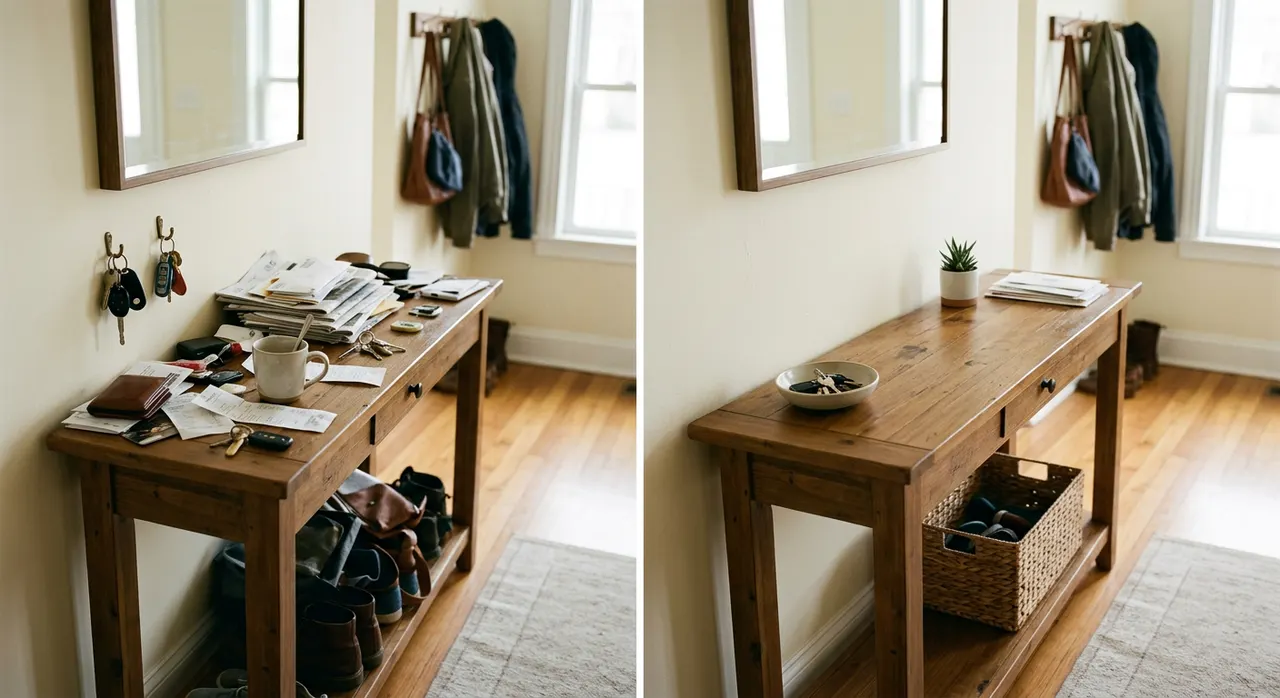
Let's try one. Look at the immediate area inside your front door. It's often a landing strip for all sorts of things. Pick a square foot, or just the top of a small console table if you have one there.
- Set your timer for 5 minutes.
- Grab your three bags (or designate three spots on the floor).
- In that small area, sort everything: junk mail to trash, keys that belong on the hook to 'belongs elsewhere,' and perhaps a stray glove to 'keep here' for now.
- When the timer dings, take out the trash bag.
How do you feel? Even a small clear patch by the door can make a massive difference to your mental load when you come home.
Be Kind to Yourself
The biggest hurdle when you're overwhelmed is often self-judgment. You might tell yourself you 'should' be able to handle it, or that your home 'shouldn't' look like this. Stop. Your home is lived in. Life is messy. And you are doing your best.
Every tiny step you take, no matter how small, is a win. It's a signal to your brain that you are capable, and that progress is possible. Don't aim for perfect; aim for slightly better than before. That's more than enough.
You've got this, one tiny step at a time. And if you ever need a little guidance on what that next tiny step could be, remember ClutterBuster can help turn a photo of your space into a super manageable plan tailored just for you.